Are HOA or POA fees making your Carolina Forest search feel confusing? You are not alone. With master-planned communities, sub-neighborhoods, and condos all in the mix, fees can look very different from one street to the next. In this guide, you will learn what these fees usually cover, how they are set, how they impact your budget, and the questions to ask before you make an offer. Let’s dive in.
HOA vs POA in Carolina Forest
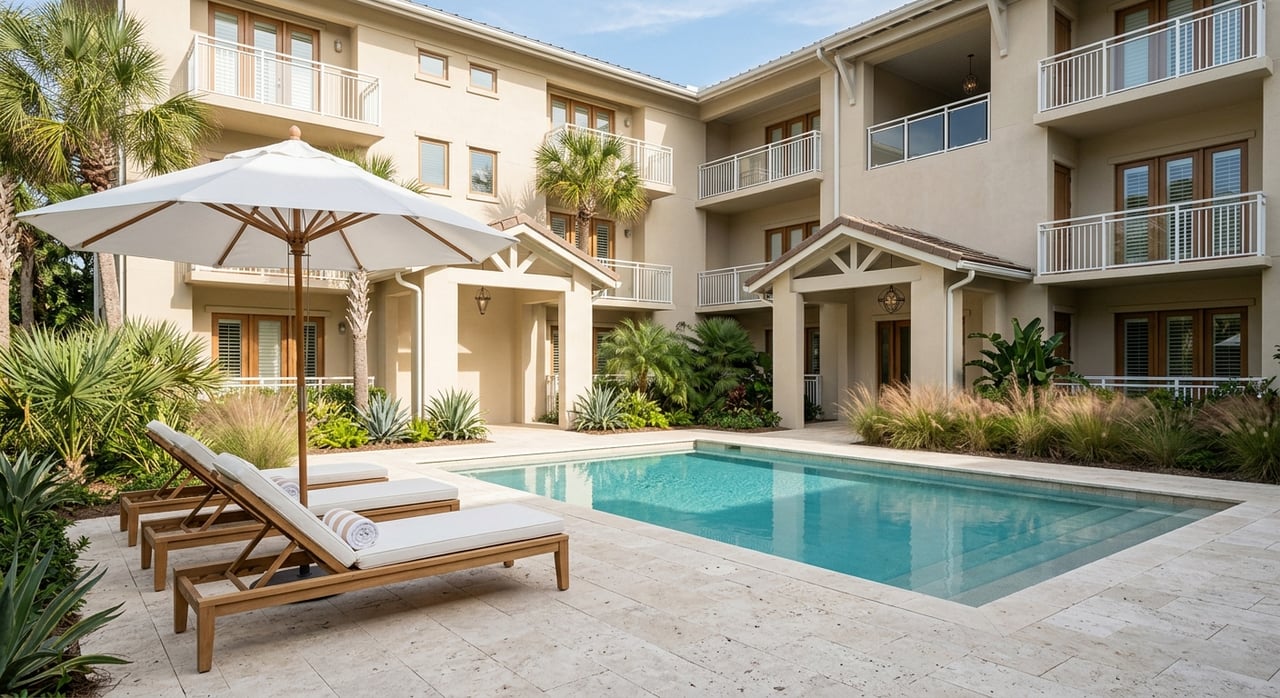
Carolina Forest includes many communities with different association structures. An HOA typically serves a single neighborhood or condo building and enforces community rules. A POA often acts as a master association for larger, master-planned areas. It can manage shared roads, amenities, and open space that serve multiple sub-neighborhoods.
Some properties here fall under a single HOA. Others belong to a master POA plus a sub-HOA. That layered setup means you could have more than one assessment. Always confirm exactly which associations apply to the home you are considering.
What fees usually cover
HOA and POA fees are meant to run and maintain shared spaces and services. What is included can vary by community.
- Exterior common area care such as landscaping, trees, lighting, and signage.
- Amenity upkeep and operations including pools, clubhouses, fitness rooms, and playgrounds.
- Insurance for shared facilities. You still typically need your own homeowner policy.
- Trash or recycling service in some communities, plus gate or security and pest control for common areas.
- Professional management and administrative costs like accounting, legal, and meeting expenses.
Items that are often not included should be budgeted separately. These can include your personal utilities, interior insurance, property taxes, and yard care inside your lot lines. Major capital projects may need special assessments if reserves are low. Always review the fee schedule to see exactly what is covered.
How fees are set and billed
Boards adopt an annual budget that sets the assessment level. A healthy budget usually includes reserve contributions for long-term items such as roofs, roads, or pool replacement. If reserves are underfunded, the risk of special assessments goes up.
Fees can be billed monthly, quarterly, or annually. Some associations allow ACH or credit card payments and may add small convenience fees. You may also see one-time charges like transfer or resale fees, capital contributions at closing, architectural review fees, or late and violation fines.
Associations can record liens for unpaid assessments. Liens can affect your ability to close and, in some cases under South Carolina law, lead to foreclosure. Always review the governing documents for collections policies, fine schedules, and procedures.
South Carolina context to know
Associations operate under their CC&Rs, bylaws, rules, and South Carolina laws. Before you buy, request and review the governing documents and any required disclosures. If anything is unclear or feels risky, consult a real estate attorney for guidance.
Budget impact on your purchase
In Carolina Forest, fees vary widely. Some single-family neighborhoods charge modest annual dues for basic landscaping and minimal amenities. Amenity-rich or gated communities and condos tend to have higher monthly or quarterly fees. Because each neighborhood is different, rely on the actual HOA documents and the listing details, not general averages.
To budget well, convert any billing cycle to a monthly number. Lenders include HOA fees in your housing payment calculation. Higher dues can affect the loan amount you qualify for and your final price point.
Here are simple illustrative examples to show the range:
- Low-service neighborhood: $300 per year equals about $25 per month.
- Moderate neighborhood with basic amenities: $900 per year equals about $75 per month.
- Amenity-heavy or condo community: $300 to $500 or more per month depending on services such as pools, security, elevators, and building insurance.
These are examples only. Always obtain the exact figures for the property you are considering.
Layered fees in master communities
Carolina Forest has many master-planned areas. You may pay a master POA that covers large shared amenities and roads. A sub-HOA may then charge for neighborhood-level landscaping and rule enforcement. Some condos and townhomes carry separate building or maintenance fees on top of that.
To understand the true monthly impact, add up all applicable assessments. Ask for the master POA fee, the sub-HOA fee, and any condo or building fee. Confirm what each fee covers so you do not double count services.
Due diligence checklist before you offer
Confirm the financial health of the association and the rules that affect your use and resale. Use this list while you shop, then again during your contract period.
Documents to request:
- Current CC&Rs, bylaws, and rules and regulations.
- Most recent annual budget, year-to-date financials, and any audited statements.
- Reserve study and reserve fund balance.
- Minutes from recent board meetings, ideally the last 12 to 24 months.
- List of any pending or approved special assessments and projected assessments.
- The full fee schedule for every applicable association.
- Insurance summary for common areas and master policy details.
- Disclosure of any pending or threatened litigation.
- Resale certificate or association disclosure packet, if required.
Key questions to ask:
- Is the property part of a master POA, a sub-HOA, or both? What does each one charge and cover?
- How often are fees collected? Are payments automated? What are the late payment and collection policies?
- What is the reserve balance relative to the reserve study recommendations?
- Have there been special assessments in the last five years? Are any planned?
- Are there restrictions like rental caps, pet policies, or architectural controls that affect your plans?
- Who enforces rules, and what does the fine process look like?
- Are capital projects such as repaving or pool replacement scheduled that could raise fees?
- Does the association require specific insurance types or deductibles that affect your premiums?
- Do recent meeting minutes show any board conflicts or turnover?
Logistics to confirm:
- Who pays for the resale certificate or estoppel in your transaction?
- Are there lender requirements for condos or the project that could slow financing?
- Will any outstanding assessments or fines be cleared at closing?
Red flags to watch
A strong association supports property values and a smooth owner experience. Be careful with communities that show the following patterns:
- Low or no reserves compared to a recent reserve study.
- Frequent special assessments or emergency repairs.
- Active litigation that could increase costs.
- Unclear financials or instability in the board.
If you see these signs, dig deeper and consider your risk tolerance.
Where to get answers locally
- Seller and listing agent can provide current fees, governing documents, and recent minutes.
- The HOA or POA management company or Board can supply the official fee schedule, budget, reserve study, and insurance summary.
- Horry County records and GIS offer property tax data and flood mapping context.
- Your lender or mortgage broker can show how fees affect your qualification and whether the condo or project needs special approval.
- A real estate attorney is helpful when documents are complex or if you need legal interpretation.
Your next step
You deserve clear numbers and a plan that fits your lifestyle and budget. If you are comparing Carolina Forest neighborhoods, bring your short list and fee questions. I will help you confirm which associations apply, what the fees cover, and how to factor them into your purchase.
Ready to move forward with clarity? Connect with Mary Richards for neighborhood-specific guidance and next steps.
FAQs
What is the difference between an HOA and a POA in Carolina Forest?
- An HOA typically manages one neighborhood or building, while a POA often serves as a master association for multiple sub-neighborhoods and shared amenities.
How much are typical HOA or POA fees in Carolina Forest?
- Fees vary widely by neighborhood and property type, so always verify the exact amounts in the listing details and governing documents.
Do lenders count HOA fees in my monthly payment?
- Yes, lenders include HOA fees in your housing payment and qualifying ratios, which can affect your approved loan amount.
What is a special assessment and why does it happen?
- It is a one-time charge that covers unexpected or underfunded projects, often due to low reserve balances or major repairs.
Could a property have more than one association fee?
- Yes, many master-planned areas have a master POA plus a sub-HOA, and some condos have an additional building fee.
What happens if HOA fees are not paid?
- Associations can record liens for unpaid assessments, which can disrupt closing and may lead to foreclosure under state law.
What documents should I review before making an offer?
- Request the CC&Rs, bylaws, rules, budget, financials, reserve study, meeting minutes, fee schedules, insurance summary, and any assessment or litigation disclosures.